By Darrell Peil, Knauf Specifications/Business Development Mgr., Commercial & Industrial
Pipe insulation has been essential for mechanical systems for decades, improving energy efficiency, safety, and system performance. Without it, energy consumption is 85-90% higher*, condensation and microbial growth become rampant, hot systems present hazards, and water systems routinely freeze.
Yet, despite being a simple, cost-effective solution, offering a very short-term payback, pipe insulation is often overlooked until problems arise.
Why use Pipe Insulation?
Pipe insulation provides many important functions:
Process Control
Control of heat loss or heat gain is the function of energy conservation. If heat loss from heated contents or heat gain in cooled contents is reduced, less energy needs to be applied to the contents.
Economical Facility Operations
Saving energy cost is probably the biggest driver for using pipe insulation and is a direct outcome of the slowed heat transfer described above. Less energy used to heat or cool the pipe contents results in monetary savings.
Condensation Control
The proper thickness of insulation will keep the surface temperature of an insulated pipe system above the dewpoint temperature of the surrounding environment. A high-performance vapor retarder system must also be applied to the exterior of the system to slow water vapor transmission.
Personnel Protection
A particularly key role of pipe insulation is safety in the workplace. Many piping systems operate at high temperatures that can present a burn hazard to personnel. Using sufficient thickness of pipe insulation reduces the system’s surface temperature eliminating or mitigating burn risk.
Slow Freezing in Pipe Systems Contents
Pipe systems can be installed in locations subject to freezing winter temperatures, causing significant trouble and expense if the contents freeze during periods of low or no-flow operation. Insulation will not stop freezing but it will extend the time to freeze by slowing heat loss.
Acoustical Control
Many thermal energy insulation materials effectively control the transfer of sound. Pipe insulation can reduce the sound transmitted by piping systems, like storm water or wastewater systems, into occupied spaces.
Fire Safety
Some pipe insulation materials have very low rates of flame spread and smoke generation when subjected to fire. Fire response properties are highly important to the overall life safety of the occupied structure.
Carbon Sequestration/Decarbonization
Pipe insulation is an effective material for reducing operational carbon emissions from the built environment.
Types of Pipe Insulation Materials
Pipe insulation comes in various materials, each suited for specific applications:
- Mineral Fiber: Includes fiberglass and rock/slag fiber, the most widely used insulation types.
- Mineral-Based: Cellular foamed glass, calcium silicate, and alkaline earth silica offer durability and fire resistance.
- Synthetic Rubber Foam: Flexible, expanded foam made from synthetic rubber, available in closed- and open-cell forms.
- Polymer-Based Foams: Includes expanded/extruded polystyrene, polyisocyanurate, polyolefin, phenolic resin, and melamine, each offering unique thermal and moisture resistance properties.
Choosing the right material depends on the specific needs of the project, including temperature control, moisture resistance, and fire safety. It is imperative that the application be understood for directing the proper choice of material(s) for a project.
Key Performance Properties
Key performance properties for pipe insulation are largely standardized, with some variation caused by properties unique to a particular material or class of materials. These properties are detailed in the ASTM standard specification for each product type. The properties discussed here are basic to all pipe insulation products and have standardized ASTM industry test methods to validate these essential properties.
Thermal Conductivity: Basic measure of how much heat energy a material will conduct based on a standard thickness over a specific time with a given mean temperature between the system operating temperature and the outer surface temperature of the insulation. This is tested per ASTM C335.
Continuous Service/Usage Temperature Range: The upper limit is tested per ASTM C411. The lowest temperature and intermittent “spike” limits are producer-determined, with no industry standard. Continuous service temperature is the key metric.
Water and Water Vapor Transport Properties: Water absorption, adsorption, and water vapor transmission are the typical measures used to indicated how effective a material is in resisting the movement and retention of liquid and vapor water forms through the material.
- ASTM E96: The primary test for water vapor transmission.
- ASTM C1104: Measures the amount of water vapor absorbed by mineral fiber insulation in high-humidity conditions.
- ASTM C1763: Evaluates a material’s liquid water retention by immersing it under specific conditions.
Fire Response Properties: Two primary tests evaluate fire resistance:
- ASTM E84: The most common standard for assessing a material’s fire response. It measures flame spread—how quickly fire travels along a material’s surface; and smoke developed—the amount of smoke produced during combustion.
Low ratings in both flame spread and smoke developed are essential as they enhance evacuation safety and minimize damage in case of a fire. Although ASTM E84 does not have a pass/fail criterion, most building codes require a flame spread index of 25 or lower and a smoke developed index of 50 or lower. It’s important to note that a product cannot “pass” this test; it simply receives a rating based on measurements.
- ASTM E136: Another significant test, though not applicable to all materials. It identifies materials that do not contribute to combustion or significantly increase an ambient fire’s heat. This test does have a pass/fail outcome, and materials that pass are typically classified as noncombustible.
Dimensional Characteristics: Dimensional properties are key to the effective and correct performance of an installed system. The insulation must fit the pipe with a close fit for many reasons that maintain system integrity and performance. Most factory molded or fabricated pipe insulation materials use the dimensional standards detailed in ASTM C585. These properties, although not an exhaustive list, are fundamental to selecting and installing effective, safe, and durable pipe insulation.
Pipe Insulation Sizing: Pipe insulation is designed to fit specific pipe or tube sizes and is available in a wide range of dimensions. The inside diameter of the insulation matches the outside diameter of the pipe, with sizes ranging from as small as ¼ inch to as large as 36 inches.
Wall Thickness Options:
- Single-layer thicknesses: Ranges from 3/16 inch to 6 inches.
- Incremental changes: Typically occur in ½-inch steps.
Multi-layer Installations: ASTM C585 standards are designed to allow the correct fitting of multi-layer insulation systems and achieve the desired total thickness using multiple layers. It’s important to note that not all materials are available in every combination of inside diameter and wall thickness, so understanding these specifications is crucial for effective product selection.
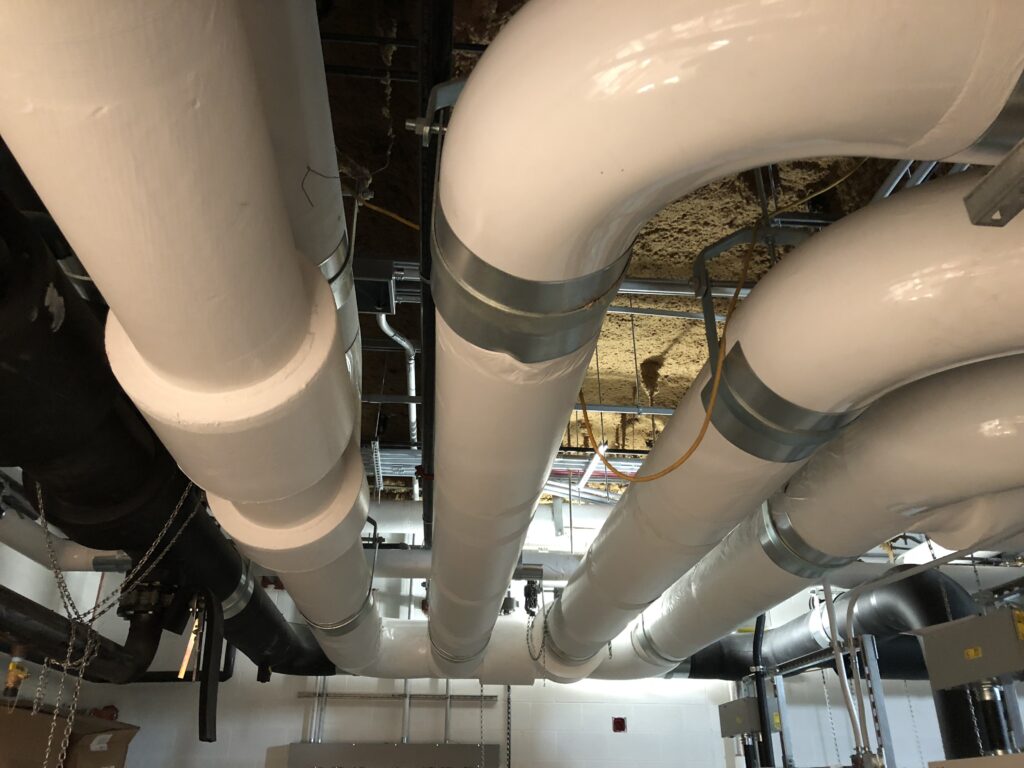
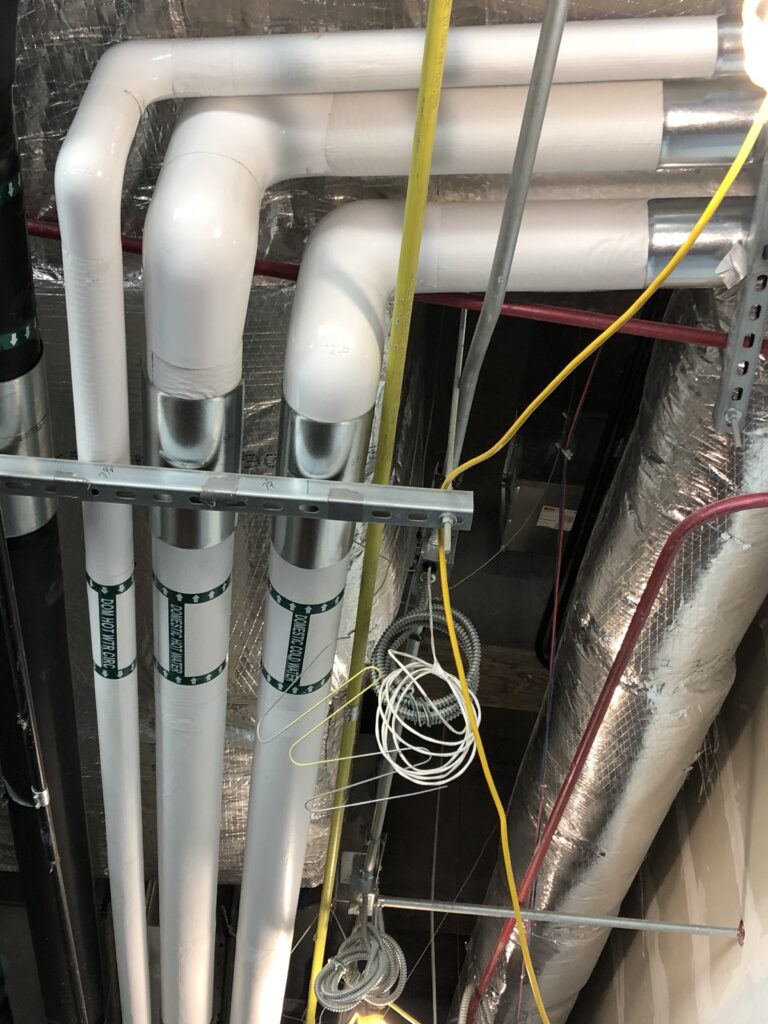

The design and installation of pipe insulation systems involves thermal dynamics, materials science, and environmental considerations. Understanding best practices in pipe insulation will enhance your expertise and contribute to more efficient and sustainable insulation solutions.
Ultimately, pipe insulation is not just about wrapping pipes—it is about enhancing energy efficiency, ensuring safety, and contributing to the broader goals of environmental sustainability. ▪