Thomas Kanata Inc. completes Canada’s largest insulation project and achieves industry-first practices
By / Natalie Bruckner • Photos by/par Thomas Kanata Inc.
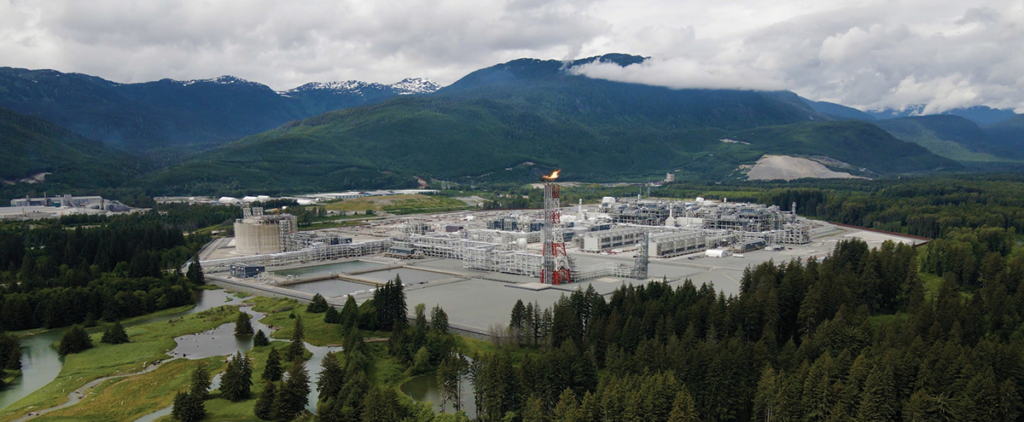
When Thomas Kanata Inc. was awarded the contract for insulation and coating services on the LNG Canada project in Kitimat, the company’s team stepped into what would become the largest insulation contract in Canadian history, and arguably one of the most complex.
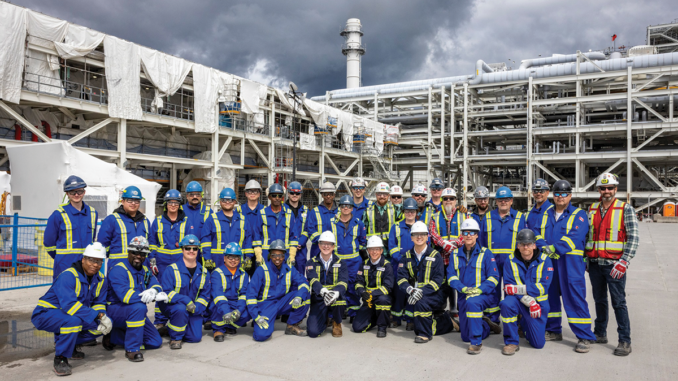
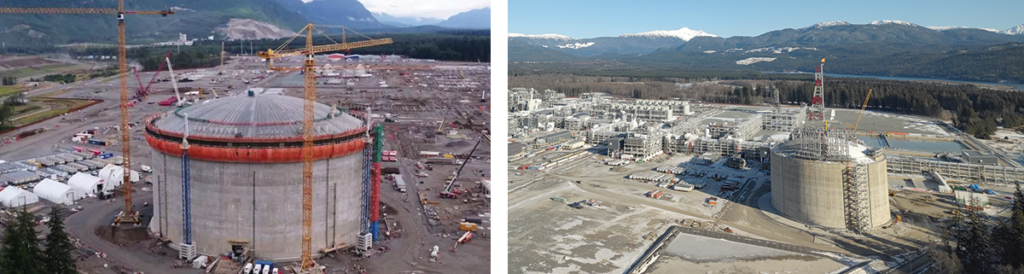
The project, which included work on the second largest LNG tank in the world with a capacity of 225,000 cubic metres, grew to involve, at times, as many as 1,300 Canadian tradespeople (and that’s not counting the occasional bear that wandered onto the site). It was also the largest project ever undertaken by Thomas Kanata Inc. and a milestone for the Canadian insulation industry.
Working under a hybrid model that combined construction management with direct-hire internal insulators, Thomas Kanata Inc. also subcontracted portions of the work out. The company successfully managed six subcontractors in total (five insulation and one coating), demonstrating that collaboration and innovation can thrive even on megaprojects of this scale. It’s little wonder then that Thomas Kanata Inc. earned the TIAC Excellence Award, presented at the 2025 TIAC Conference in Whitehorse, Yukon, this summer.
“I think we were just kind of thrown into this job, quite honestly,” laughs Jovi Padley, project engineer at Thomas Kanata, as he reflects on how it all began. “We started with a small scope of work, right around the $5 million mark, and it just snowballed from there. We ended up completing approximately 95 per cent of the insulation and coating scope on the site.”
Cory Evans, project manager at Thomas Kanata, adds: “The original tank was a different contract. Then we got offered the JFJV contract [Fluor Canada and JGC Corporation Joint Venture], so what started with a small crew of around 20 to 30 guys ended up growing to a contract with a consistent workforce of around 1,000 people.”
With the project scope spanning tanks, towers, and cryogenic piping operating at temperatures as low as -162° C, the insulation work on LNG Canada was as technical as it was extensive. “We’d worked to -100°C before, but never -162° C,” Evans explains. “It brought extra hazards, but the team handled it.”
The work required meticulous adherence to three overlapping specifications—Shell, CINI, and ASTM standards—making precision and quality control critical. Another unique aspect of the project, and also a first in Canada, was the CSPE jacketing (ULVA) that is made in the UK and required every worker to take a full two-day on-site training course.
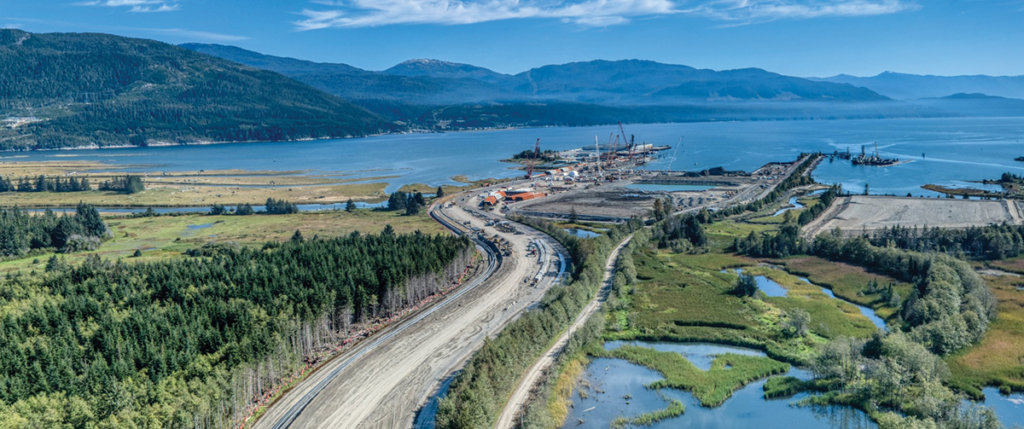
The project came with its share of challenges, but the Thomas Kanata team took them in stride. Kitimat’s weather, for example, was one, with nearly six feet of rain annually, heavy snow in winter, and constantly changing conditions. Material supply and application were equally demanding., “Missing a vapor barrier, as an example, or a slightly oversized gap, could force a full restart,” Padley says. “The devil was in the details.”
Beyond mastering the extreme materials and conditions, Thomas Kanata Inc. also broke new ground with innovation. One of the most unique aspects of the project was the foam injection system they developed. While similar systems had been used in Australia and Italy, nobody in Canada knew how to do it. “We were the first to create and use it here, and it really increased our workflow,” Padley explains. “We were also the first in Canada to do an in-service cryogenic repair on an LNG plant and were able to strip that frost and reapply insulation as needed, without compromising the system.”
While the technical skills required on the project are undeniable, the project’s success was ultimately due to the people, strong management, and open communication and respect among the workers.
“The morale and camaraderie were incredible,” Evans adds. “Nobody was just standing around collecting a paycheque—everyone worked hard and was determined to do their best. But it wasn’t all work; the after-work activities were a lot of fun, too. We went on fishing trips, hikes to waterfalls, and there was always something new to do.”
“The best part of being the manager was being surrounded by the smartest people I’ve ever met,” Padley adds. “I was never the smartest person in the room.”
Finding skilled workers in a remote location could have been challenging, but the team’s reputation made it easier than expected. As Padley explains, “People on site would say, ‘This is the best job we’ve ever been on,’ and they’d tell their friends, who would tell their friends. There are three forms of communication: telephone, telegraph, and tell-a-insulator. It worked. Even when we were at full capacity, people kept calling every day to see if there was room for them.”
The project also achieved zero lost-time incidents over 1.5 million personhours and featured deep integration of local Indigenous employment and apprenticeship training, underscoring the team’s commitment to both safety and community development.
With the scope of work complete in September 2025, the team is glad to be back home after an intense, record-breaking project. Their efforts on LNG Canada were recognized this summer when Thomas Kanata Inc. received the TIAC Excellence Award, a prestigious honor that celebrates outstanding achievement in insulation projects.
“Winning the TIAC Excellence Award for this project was pretty sweet,” Padley reflects. “Our boss let us fly up to Whitehorse for the presentation, and we got to receive the award in person. It was great recognition for everything the team accomplished.”
Evans adds with a laugh: “Yeah, it was a great feeling, and I was actually the first one to drink champagne out of the award cup, too!” ▪