
By / Jessica Kirby
The Education Partnership Foundation and Local 110 send mechanical insulation students to Skills Canada Alberta—the only Skills Canada competition to have a mechanical insulation component
Since 2024, students interested in trades training, including mechanical insulation, have been able to learn the skills while still in high school, thanks to an innovative partnership between The Education Partnership Foundation (TEPF), Local 110, and various school boards in the Edmonton and Calgary area.
The eight-week accelerated training program offers high school students a pre-trades course that allows them to gain work-readiness skills and register their apprenticeship, all while earning school credits. The training also includes safety certification, like fall arrest, elevated platform, asbestos awareness, and others.
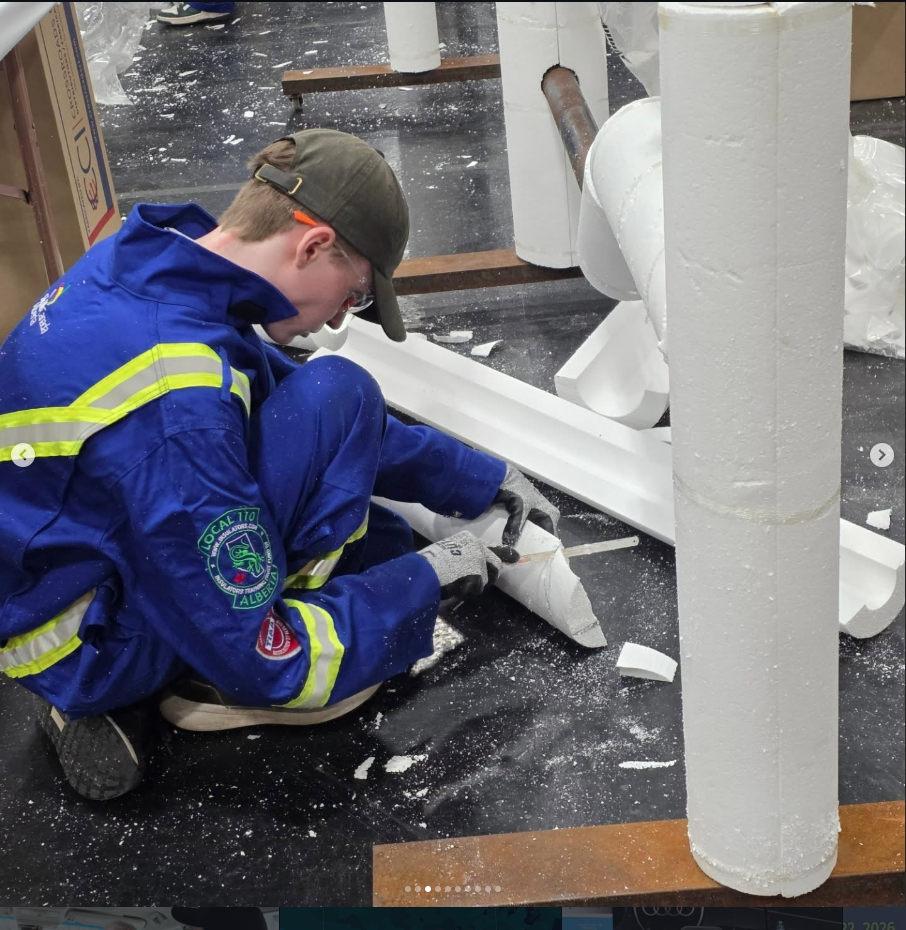
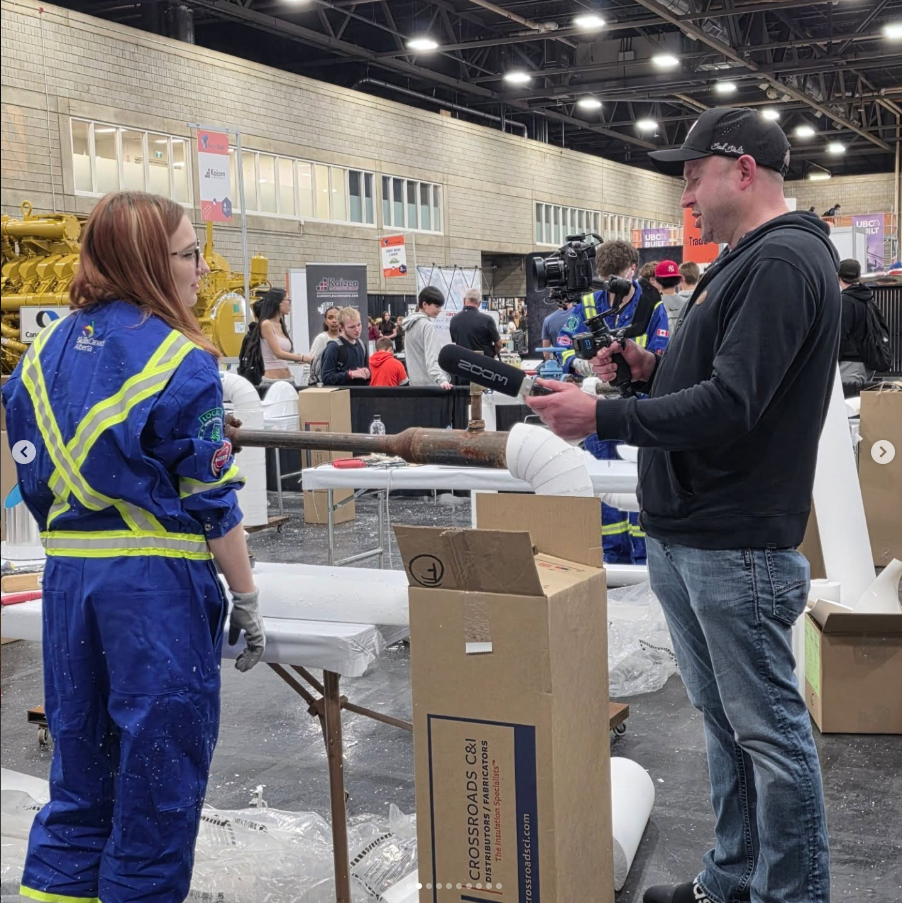
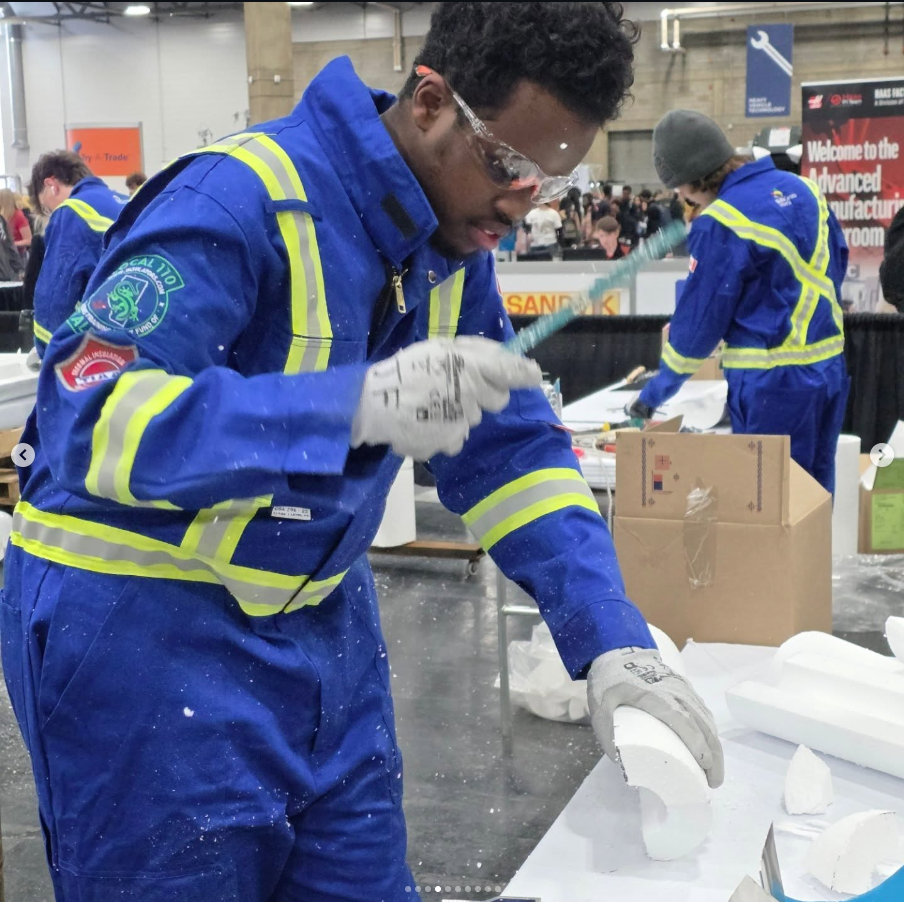
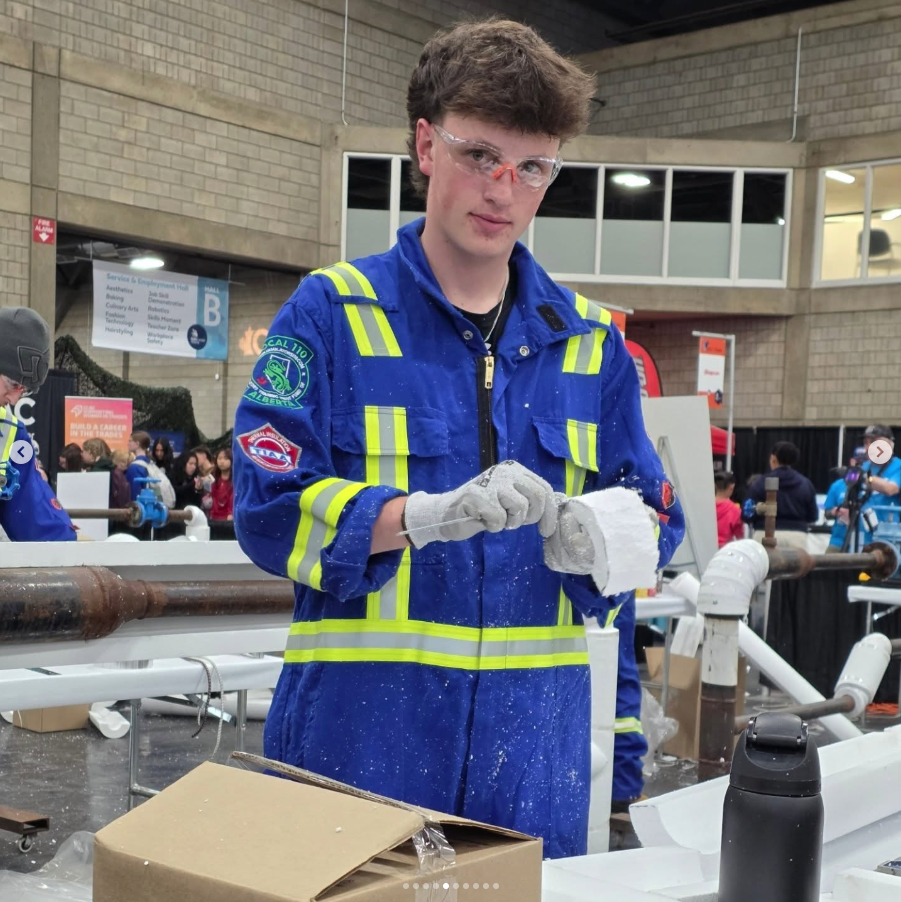
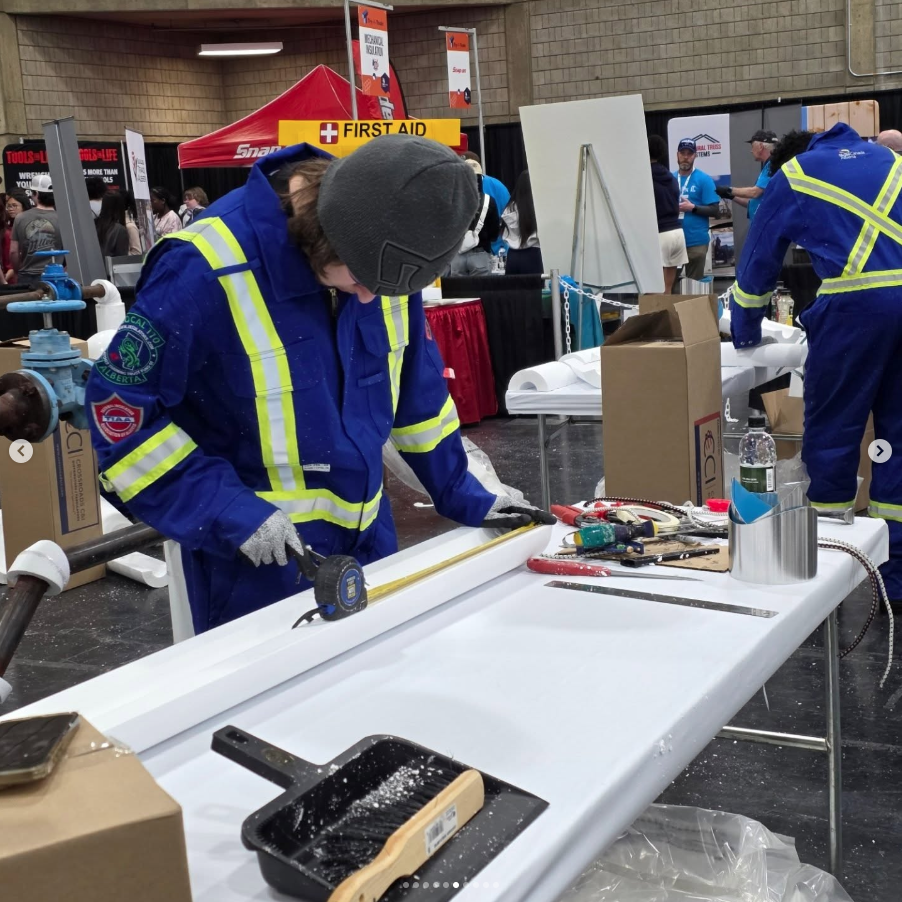
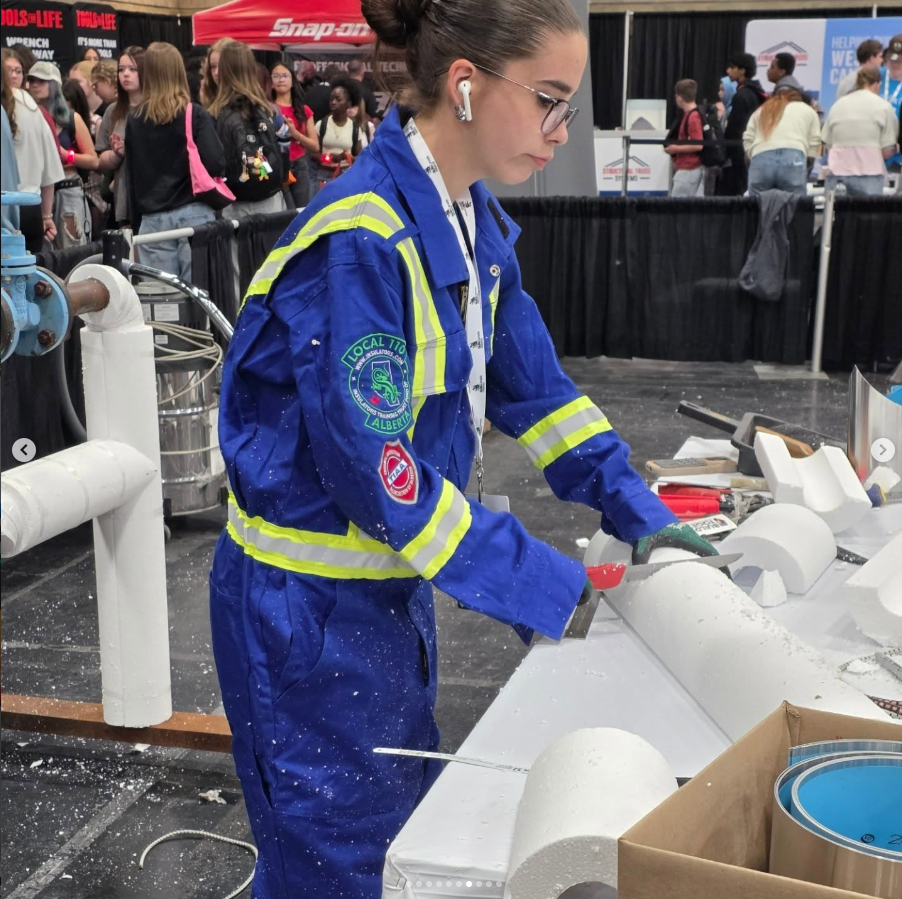
This past May, students from the program also took part in the Skills Canada Alberta competition, representing the insulation industry across the two-day event, and showcasing the trade to thousands of visitors and observers.
“This year, the chair of the mechanical insulation competition varied from the typical structure of including competitors from NAIT, SAIT, and Local 110,” says Andrew Garrett, client and contractor liaison for Local 110, which delivers the technical training component. “He chose instead to have all six of the Skills competitors be students taking part in the TEPF pre-trades program, and to have the Skills Competition serve as a bookend to their program.”
Skills Canada competitions run across the country, highlighting students in various trades competitions with practice, theory, and project phases. But Skills Canada Alberta is the only provincial competition in Canada to offer a mechanical insulation component.
Victoria Anderson, manager of communications for Skills Canada Alberta, says the organization has a valued partnership with Thermal Insulation Association of Alberta (TIAA) and Local 110 and recognizes the importance of mechanical insulation in the fabric of Alberta’s trades industry.
“That is why we believe it is important that mechanical insulation is represented at our competition,” she says. “Not just for the competitors themselves, but for the 10,000 students touring the event to learn more about trade and technology career options. Skills Canada Alberta has been hosting Mechanical Insulation at the Provincial Skills Canada Competition since 2008.”
Having TEPF students represent the trade at Skills Canada is “a milestone for our program and for the mechanical insulators trade,” says Angelique Lachance, director, trades careers at TEPF. “Having every competitor come from TEPF shows what is possible when students are introduced to apprenticeship training while they are still in high school.
“The Skills Canada competition gives them a chance to challenge themselves and see how far they have come,” Lachance says. “It also helps them recognize that they have access to a rewarding lifelong career.
Students prepared for the competition at the training centre, learning from certified instructors, practising their hands on skills, and spending time in the classroom learning theory.
“By the time they entered the competition they had already built a solid foundation and understood what was expected of them,” Lachance says.
Competitors demonstrated their skills in craft and theory, culminating in a project that is based around a pipe rack that has been used for the competition for many years.
“Competitors spend the first day making the custom cuts and applying insulation to the pipe rack,” Garrett says. “The second day tasks the competitors with applying finishing materials over the insulation. At the end of each day, a small team of judges, including journeypersons with current field experience and a former NAIT instructor, assess that day’s work with a detailed marking rubric.”
Tyler Falt, client contractor liaison for Local 110 judged this year’s competition. He evaluated each completed pipe rack based solely on the finished product, without knowing which competitor had completed the work. This blind judging process ensured that every participant was assessed fairly and objectively against the same criteria.
“It was impressive to see the level of precision, attention to detail, and technical ability demonstrated by the students,” Falt says. “The quality of work reflected both the dedication of the competitors and the strength of the TEPF program in preparing them for the mechanical insulation trade.”
He adds that the competition atmosphere was a highlight, with a notable sense of pride, focus, and professionalism tangible throughout the event.
“In a relatively short amount of time, the students demonstrated a level of dedication and commitment to their work that was impressive to see,” Falt says. “It was clear they took the competition seriously and wanted to showcase the skills they had developed through the TEPF program. Seeing that enthusiasm for the trade and the quality of work they produced was both encouraging and rewarding.”
In fact, the biggest challenge the judges experienced at the competition was finding flaws in the students’ work. “As judges, we spent more time evaluating the projects than we had anticipated because we had to carefully examine each one to identify the small details that distinguished one competitor from another,” Falt says. “That level of scrutiny is a testament to the high standard of work the students produced.”
Tanner Eriksen, competitor in the program, is going into his grade 12 year this fall. He says the instruction he received, as well as the “outstanding teachings from instructor Phil” more than adequately prepared him for the competition.
“The thing I enjoyed most about the competition was the ability to perform what I have learned in front of many,” he says. “The biggest challenge was staying focused while others surrounded the space to watch what we were doing and answering questions about our projects.”
For students interested in the TEPF program and competing in Skills Canada, Eriksen has some advice: “I would strongly encourage them to take their experience to Skills and use the opportunity to show their talents in their trade!”

Kyle Sippola, operations manager at Thomas Kanata, says government-subsidized programs like TEPF are a win-win-win for students, contractors, and the construction industry.
“There is clearly a lack of skilled tradespeople in Western Canada, so these types of programs are a way employers can invest in the workforce and young people can become indentured apprentices, which is good for the long run in Canada,” he says.
Many recruitment programs are focused on students in their senior year or as they are leaving high school, which Sippola says might be too late. “I hear they don’t really know what they want to do, and so they are pushed to do academic post-secondary education and get a desk job, and the trades are forgotten,” he says. “But a lot of these kids pick up a tool in grade 10 and home in on their hand skills.”
The Educational Partnership Foundation helps make the program possible by providing financial and organizational resources, logistical support, and industry connections that give students real opportunities to succeed.
“Our partnership with various school boards works so well because we’re aligned in our purpose,” says Barb Simic, TEPF president and CEO. “Together, we’re not just talking about career opportunities—we’re giving students a chance to live them, learn real skills, and build confidence for a career in the trades and their future.”
Recognizing that not every student learns the same way, the partnership aims to provide alternative routes to success beyond traditional academic paths.
“For many young people, especially those facing tough circumstances, trades programs can be life-changing—offering stability, purpose, and a pathway out,” Simic says. “Trades offer a clear, practical path forward—especially for students who feel stuck or overlooked in traditional education.”
Falt says having students participate in Skills Canada showcases what the TEPF program truly stands for.
“It provides students with a real opportunity to demonstrate the skills they’ve developed while giving future apprentices a clear picture of what a career in the mechanical insulation trade can offer,” he says. “One of the most rewarding aspects was seeing the students’ reactions as they stepped back and realized the level of quality they had achieved. That sense of pride and accomplishment helps build confidence and reinforces the value of the training they have received.
“Competitions like this not only recognize technical ability but also inspire the next generation of skilled tradespeople to pursue excellence in the trade.” ▪